Showing posts with label Skincare. Show all posts

Monday, March 12, 2012

Chemical Peels At Home: How To

Chemical peels have been around for a long time-ancient Romans used food acids aka Lactic Acid to peel their skin to reveal younger, brighter looking skin. Today there are so many different chemical peel options, and it can be overwhelming to figure out which is best for your skin.

Picking your poison: 

What kind of chemical peel is best for your skin?

-Lactic Acid: Lactic Acid is one of the safest peels available, and is great as a "first peel". It is safe to use on darker skin tones, and helps to hydrate dry skin. Additional benefits of using a Lactic acid peel are: treats sun damaged skin, improves the appearance of stretch marks, helps with hyperpigmentation, and improves the tone and texture of the skin.
-Glycolic Acid: A more aggressive peel that rejuvenates normal to oily skin, addressing acne, acne scarring, wrinkles, and fine lines.
-Salicylic Acid: Salicylic acid peels are great for oily skin, and are great for the treatment of blackheads.
-TCA: Excellent for acne, lines, wrinkles, sun damage, age spots and general scarring. This peel is deeper than the above three and is longer lasting.
-Jessner's: Great for treating cystic acne.

*Each of these peels can be purchased at varying strengths. I am not an expert on which percentage to choose depending on your experience with peels, but for reference I first purchased the Lactic Acid Peel (35%) and have moved onto the 70%. For first time users, it is very important to use a low percentage. Please check with your doctor and/or use discretion when choosing your strength.

I use the Lactic Acid Peel, and I use both the 35% and 70%. Since the Lactic Acid peel is beneficial to those with rosacea (which I have on my cheeks) and keratosis pilaris, I use the peel on my face and on my arms. The first time I used the 35% peel, my skin did peel, but it was't horrible; my skin just looked like it was extra dry for about three days.

How to use a peel at home:

Step 1: Gather your supplies. You will need a foundation brush (you can use almost any type of makeup brush, but I like to use a dense brush to apply the gel evenly over my face and arms), your gel peel, water, and baking soda. Baking soda neutralizes the peel on contact and stops it from penetrating the skin.
Step 2: Pour a dime sized amount of your peel gel onto your brush and apply evenly over your face (or body), avoiding the eye and mouth areas.
Step 3: Wait 5-10 minutes, then rinse with baking soda and water mixture. Do not leave the peel on overnight. I learned this the hard way!! It was not pretty.
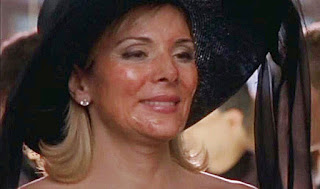


After you use a peel, it is very important to heavily moisturize and to apply sunscreen as your skin will be extra sensitive in the days following the peel. I usually use the peel at night and do not use makeup within at least 12 hours afterwards to let my skin breathe and recover.

I hope this was helpful! I'd love to hear about your experiences with at home peels if you decide to try it!


Wednesday, October 12, 2011

YSL Touche Eclat: Review

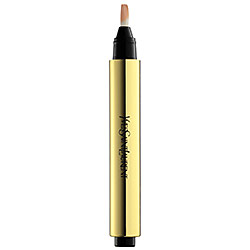
As a beauty junkie, I am always looking to try out new products, and this iconic gold tube had been on my mind as I ran out of Benefit's Erase Paste. Despite some pretty bad reviews, I purchased it anyway. What I love about YSL's Touche Eclat is that it is so smooth. Unlike Erase Paste, it doesn't settle in any lines and it stays put.

Many of the bad reviews I read stated that Touche Eclat does a poor job as a concealer.  It is not a concealer. According to Sephora, "Touche Eclat banishes shadows and tired-looking eyes by adding light and creating an instant lift to the eye area. Touche Eclat widens eyes when used between the eyebrows and along the sides of the nose and created fuller looking lips when used in the hollow of the chin and around the contour of the lips. It's formulated for all skin" 


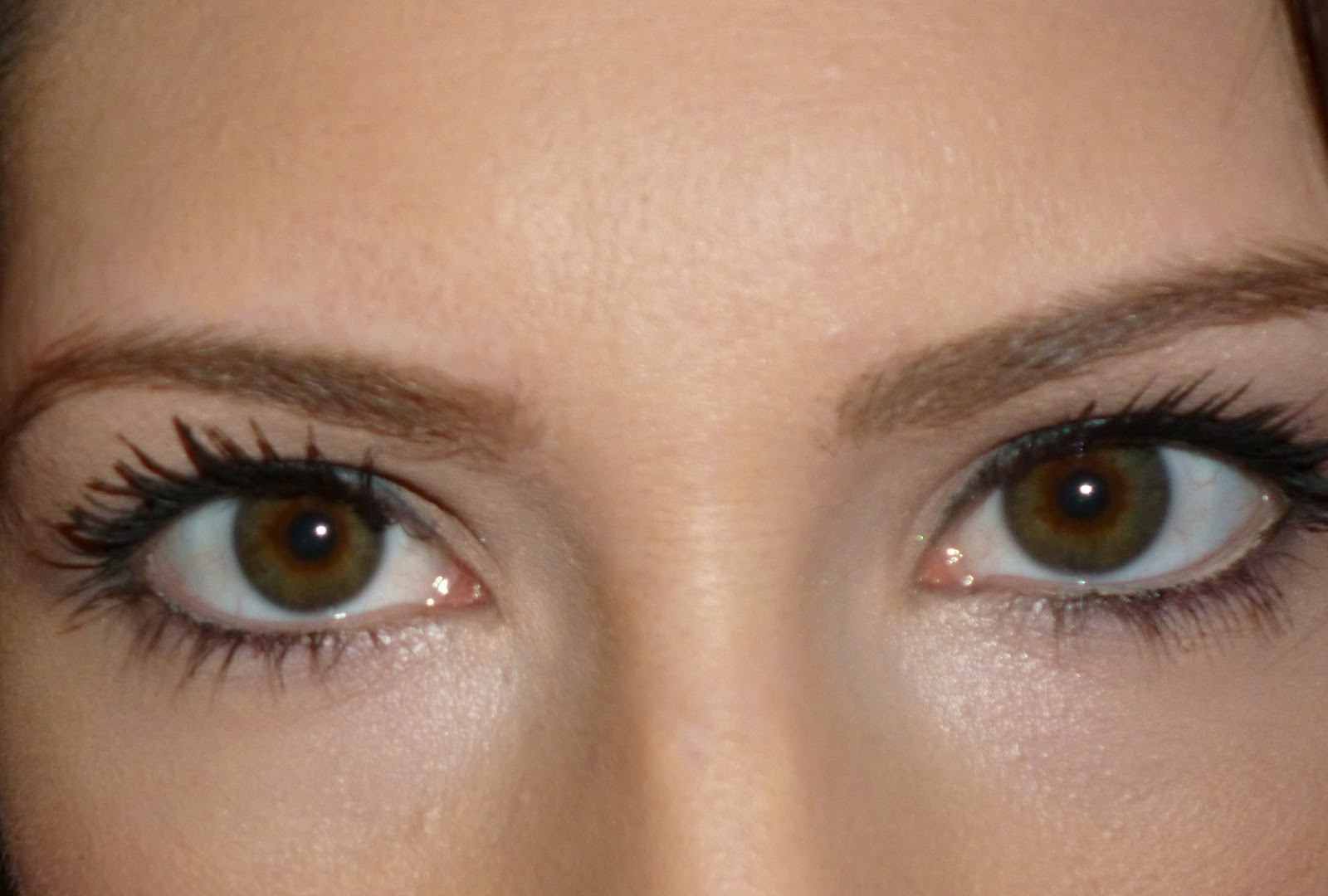
I use it in number 1, the lightest shade after I've used concealer, foundation, and powder underneath my eyes, in the inner corners, and above my lip because I like to have a light, luminescent look especially  under my eye area and feel as though applying it first, second or third diminishes the effect. 

The bottom line: I absolutely love this product and I would buy it again, however, I've seen lots of rave reviews on the significantly less expensive Maybelline Instant Age Rewind Dark Circle Concealer. I would love to know if any of you have compared the two.

P.S. I don't know how you beauty gurus take such flattering, flawless photos! I struggled like a fool for about 20 minutes to get a decent "up close" shot! I guess practice makes perfect. 

Tuesday, June 1, 2010

The Truth About Sunscreen


With summer rapidly approaching and a need for a new bottle of sunscreen, I went to research products and a rumor I've been hearing over the last several months about the safety of sunscreen. What I found out is horrifying and I think it is SO important that I share with everyone who reads my blog.
In simplified terms, most sunscreens on the market are harmful to your health for a couple reasons. First, most contain cancer causing chemicals. Secondly, sunscreen depletes the body of Vitamin D, which can slash all forms of cancer by 77%. One article I read states: "Scientific evidence shows quite clearly that sunscreen promotes cancer by blocking the body's absorption of ultraviolet radiation, which produces Vitamin D in the skin."
The carcinogenic products in sunscreen have never never been tested or approved by the FDA. As a side note, I took a pharmacology course recently and learned that many drugs are never tested by the FDA, but they pay the FDA to write them off. I believe that this is the truth regarding sunscreen products.
The chemicals that are proven to be harmful when absorbed into the skin include:
Benzophenone-3 or Oxybenzone: These are both free radical generators activated by ultraviolet light. Free radicals can initiate reactions and lead to melanoma and other skin cancers.
Triethanolamine (TEA): his ingredient may combine with nitrite (used as a preservative or may be present as an environmental contaminant) to cause formation of cancer-causing nitrosamines. Nitrites are not disclosed on cosmetic labels so there's no way of telling which products are contaminated with nitrosamines. Particularly disturbing is that up to 35 percent of TEA applied to the skin can enter the bloodstream.
Titanium Dioxide: has the ability to cause DNA damage in human cells and there is concern that it may be carcinogenic.
The Good:
Zinc Oxide: Zinc oxide is a mineral that provides complete UVB/UVA protection, has anti-inflammatory properties, and is considered a safe sunscreen ingredient. However, the regular form of zinc oxide leaves a strong white residue on the skin. To create a clear skin product rather than one that leaves a white residue, zinc oxide is now made in the form of nano-size particles. There is growing concern about the toxicity of nanoparticles, which has initiated a world-wide effort to study the skin absorption and phototoxicity of nanoparticles of preparations used in sunscreens and cosmetics.

From here, I felt helpless but found a few brands of sunscreen that did not contain the harmful products normally used in mainstream products; I ultimately chose to order a sunscreen from Kabana Skincare.
In addition to ordering sunscreen, I felt it was extremely important to buy some Vitamin D capsules as well.

To read more about sunscreen safety, click here or here
*Update: Check out EWG's website for more information and help with picking out the right sun care products for you.

Friday, May 14, 2010

Problem Skin Part I

For years I've struggled with super dry scalp (other details I will spare you) and have tried so many different products to fix the problem, I've gone to a dermatologist who told me to try something that did not work. So, I did some research of my own and discovered that I have Psoriasis. Thankfully only my scalp is affected, although I have super dry skin as well.
Here is a description of scalp Psoriasis:
Psoriasis is a noncontagious, genetic disease of the
immune system affecting the skin and/or the joints.
According to the National Institutes of Health, as
many as 7.5 million Americans have psoriasis. The
most common form, plaque psoriasis, results in raised,
red lesions covered by silvery white scale. Psoriasis can
be limited to a few lesions or can involve moderate to
large areas of skin.
Scalp psoriasis can be very mild, with slight, fine
scaling. It can also be very severe with thick, crusted
plaques covering the entire scalp. Psoriasis can extend
beyond the hairline onto the forehead, the back of the
neck and around the ears.

There are several products that are available to treat Psoriasis, below are the common ingredients:

Salycic Acid: Salicylic acid is approved by the Food and Drug
Administration (FDA), it softens
scale and makes it easier to remove. It can be used in
combination with tar or other products. Its popular
nickname is “sal acid,” and you will find it both in
over-the-counter (OTC) and prescription products,
mostly in over-the-counter shampoos and soaps.

Tar
Although tars have been classically used to treat psoriasis,
they offer an effective therapy option in treating dandruff as well.
Problems with staining, odor, and messiness in its application
make tar a second-line therapy for most patients.
Tar gelscontain coal tar extract, and they are generally less
messy and smelly than tar itself. Tar shampoos work through
antiproliferative and cytostatic effects, although definitive analy-
ses are difficult because of the large number of biologically
active components in coal tar products. Tar products disperse
scales, which reduce Malassezia (yeasts;high rate of cell turnover) colonization. I've tried Neutrogena's T-Gel which contains 2% Tar extract and it did not help much.

Zinc
It is thought that zinc pyrithione (ZPT) heals the scalp by nor-
malizing epithelial keratinization, sebum production, or both.
Some studies have also shown a significant reduction in the
numbers of yeast organisms after the application of zinc
pyrithione. (I used Pureology's Scalp Cure shampoo (which is 2% Zinc pyrithione) and conditioner for about a year and while I did see a bit of a difference, I still had extreme problems with Psoriasis of the scalp).

What I found while researching treatments was that it's very effective to use a shampoo that has a combination in high percentages of the above ingredients. In other words, drugstore products do not do the trick.
I ordered a shampoo called X-Seb T Plus online for $25, which contains 10% Coal Tar Extract and 3% Salycic Acid. LOVE IT. No more Psoriasis (however it needs to be used continually, otherwise it will return).
When I recived it in the mail, I was alarmed to see that the label said: "Warning: this product contains ingredients known to cause cancer."
...Back I went to doing research...
What I found is that a major concern of many people considering coal tar as a psoriasis therapy is cancer. While occupational exposure to coal tar (miners, asphalt workers, or chimneysweeps for example) may be responsible for some lung, skin, and scrotal cancers, no relationship between even high therapeutic dosages of coal tar for psoriasis and any form of cancer had been established. Some 25-year-long studies have found no increase in any form of cancer over what would be expected without coal tar. HOWEVER, coal tar IS a photosensitzer, which means it makes the skin more sensitive to sun. So if you are planning on using a product that contains coal tar, make sure you wear hair sunscreen or protect your scalp by wearing a hat.

I hope this has been helpful to some of you. Please let me know in the comments or e-mail if any of you have questions.I thought it would be a good thing to share since I spent hours digging for answers for this problem!


Saturday, September 26, 2009

Mario Badescu Drying Lotion Review

I just started using the Mario Badescu Drying lotion and I am very impressed. I've tried a couple other similar products but this stuff works the best. I am usually not acne prone, but during a certain time of the month, I break out a little around my chin. This stuff really zaps it--almost literally overnight. It's amazing. I've heard some others complain that it dries out your skin, so for people who already have dry skin-beware. I have combination skin and have not had any problems with it being too drying. Next up I will be purchasing the Mario Badescu Drying Cream. Have any of you tried it?